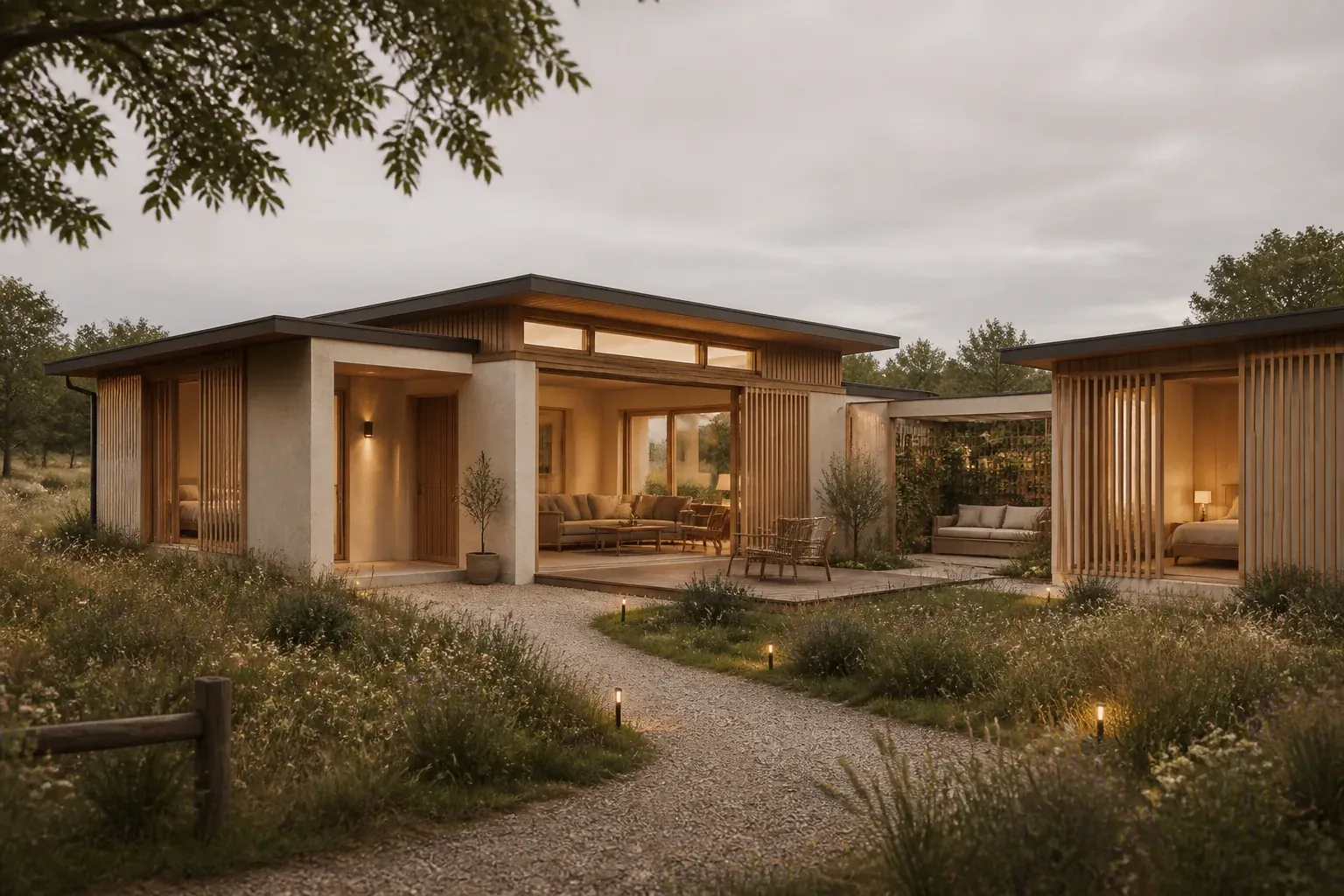
Could this fit your property?
Neurodivergent adults, families with different sensory preferences and travelers who value predictable low-stimulation space. This direction fits a host who can deliver the specific experience and its upkeep.
Adapt an existing property · Additional routines
Guest focus: Couples, Families.
Suitable setting: A genuinely quiet rural or neighborhood-edge parcel where background sound, arrival lighting and nearby activity can be measured and described honestly.
- When another approach fits better
- A site promising universal sensory comfort or a medical outcome makes another concept a better starting point.
- Minimum practical requirements
- An existing or substantially adapted home with controllable light and room separation
- Verify permitted use, utilities, occupancy and operator responsibilities for the real project
- Changes to plan
- Provide physical light controls, blackout choices and a clear sensory map
- Ongoing hosting checklist
- Check controls
- Follow low-scent routines
- Keep pre-arrival information accurate
- Example guest journey — fictional
- Before arrival, guests see a concise room-by-room sensory map instead of vague promises that the house is quiet or autism-friendly. They can request the low-scent turnover baseline, understand which appliances make sound and preview the shortest route from the entrance to each bedroom. Inside, physical controls make it easy to lower light, close acoustic curtains or keep the living room brighter without changing a bedroom. The quiet alcove provides separation without isolation from the whole group. The sample Host-Pilot guide demonstrates how a future host could document sensory conditions, cleaning products, lighting, appliance alerts, neighborhood sound, arrival steps and emergency information while encouraging direct questions and avoiding medical claims or universal accessibility language.
Editorial fit guidance, not a construction specification, safety certification, cost estimate or return forecast.